
Home

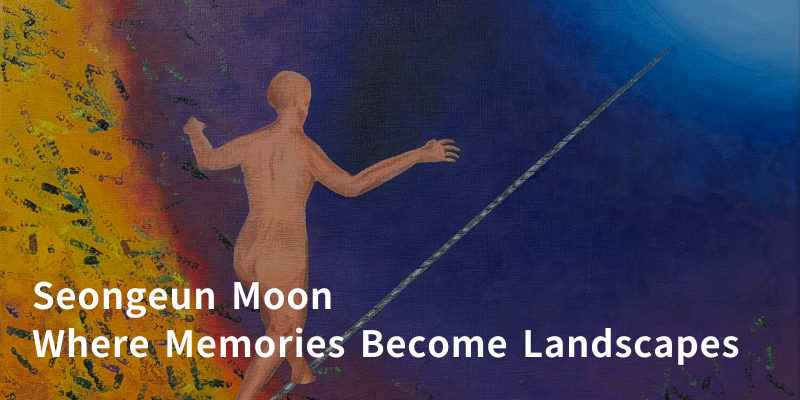
What remains after a moment has passed?
Some scenes disappear almost as soon as we encounter them, while others stay remarkably vivid. A particular quality of light, the atmosphere of a place, or the sensation of moving through a landscape may return long after the original moment has passed.
Seongeun Moon begins with these lingering impressions. Everyday surroundings, places from the past, long walks, dreams, and interior experiences all become sources for painting. Together, they reflect an interest in how perception changes once an experience becomes memory.
Rather than reproducing the past as accurately as possible, Moon considers how it has changed over time. Details fade, sensations shift, and memories become layered with the present.
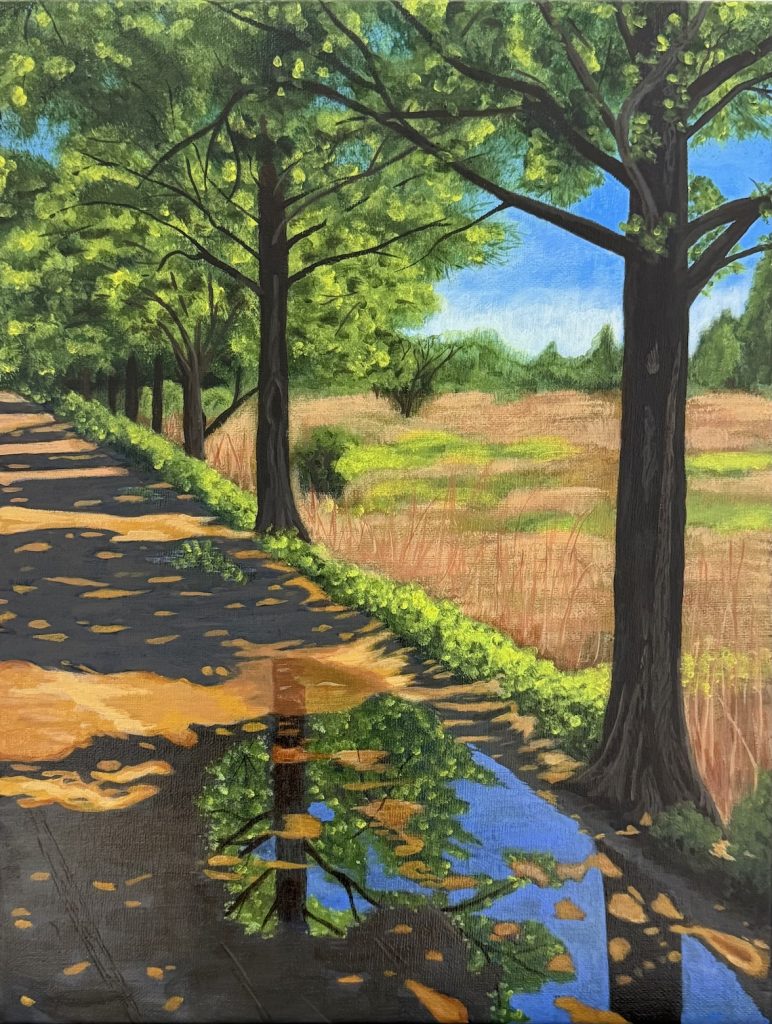
Walking as a way of seeing
Walking is an important part of Moon’s approach to observing the world. Moving through familiar surroundings allows subtle changes to come into focus: light shifts, spaces open unexpectedly, and an ordinary path can briefly appear unfamiliar.
Moon is less interested in spectacular scenery than in quieter moments when perception sharpens. A small change in weather or light can be enough to transform the way a familiar place is seen.
In this sense, landscape is shaped not only by place, but also by movement, attention, and the experience of being there.
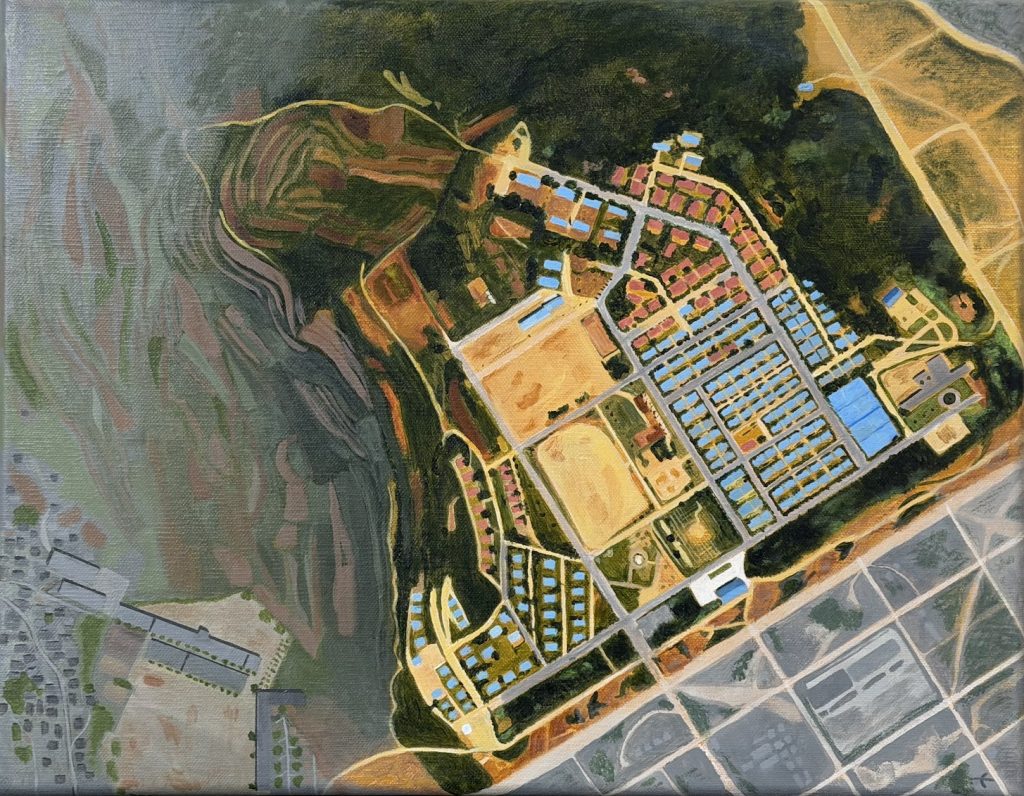
Places reconstructed through memory
Another important thread in Moon’s practice is the experience of places that have changed or disappeared. As familiar environments are transformed, certain locations can eventually be reached only through memory and surviving records.
Memory, however, does not preserve a place evenly. Some details fade while others remain unusually clear, and personal experience gradually reshapes how that place is recalled. Archival photographs and other records may serve as reference points, but not as instructions for literal reconstruction.
Moon instead brings documented space and subjective memory together. The resulting landscape exists somewhere between what was once there and what remains in memory.
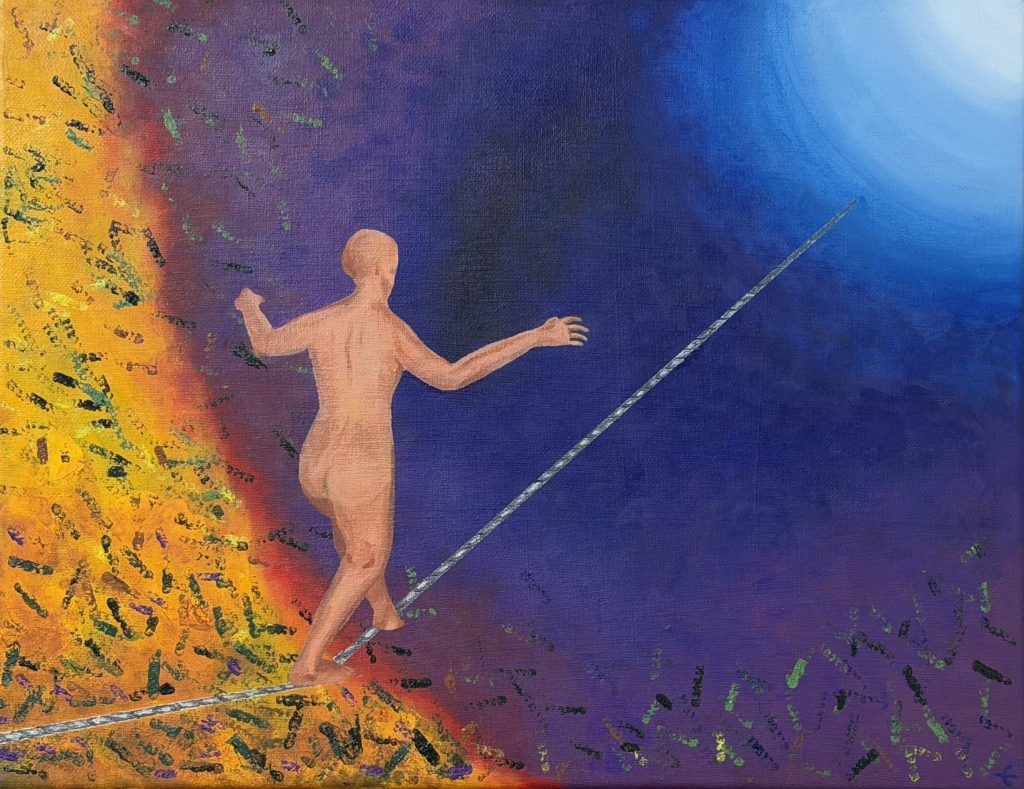
Where different times overlap
Moon’s exploration of memory also extends into dreams and states of consciousness. Internal experiences become another way of examining time, perception, and the boundaries between what is remembered and what is imagined.
Here, time does not unfold as a simple progression from past to present to future. A memory can reappear in the present, while thoughts of the future may already shape how the present is understood. Different temporal states can overlap within a single image.
Across Moon’s practice, painting becomes a way of tracing how experience is transformed by time. Landscapes, vanished places, and dreamlike images all pass through memory before returning to the canvas as something newly formed.
Curious to see more works by Seongeun Moon?
🌐 Visit the artist’s website
📸 See more works on Instagram


[…] Seongeun Moon: Where Memories Become Landscapes Contact Us […]